Pack Up the Post Office: The Strange American Tradition of Moving Whole Towns
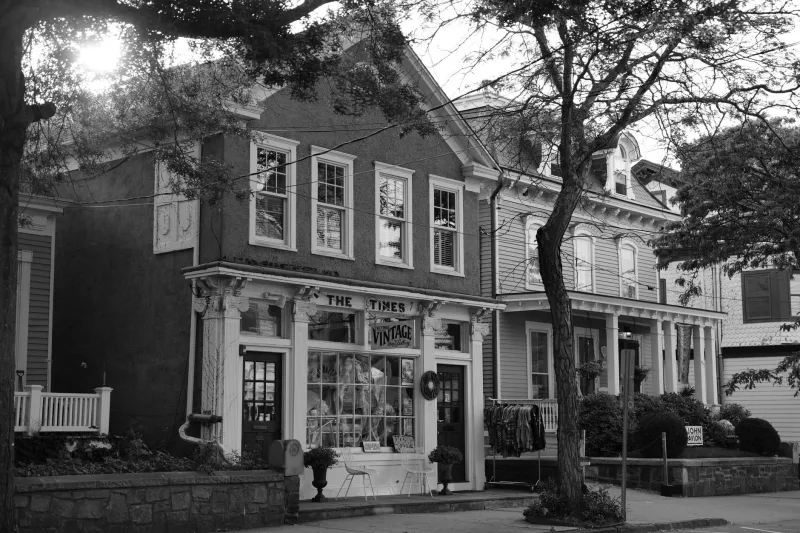
There's a question that sounds philosophical but is actually pretty practical: what is a town? Is it the grid of streets laid down by surveyors a century ago? The church on the corner where three generations of the same family got married? The cemetery where the founders are buried? Or is it just... the people?
Americans have been wrestling with that question in the most literal way imaginable — by picking up entire communities and moving them somewhere else. Not metaphorically. Not in the "we all relocated to the suburbs" sense. We're talking about physically dismantling or shifting buildings, rerouting roads, and digging up the dead to replant them in new ground. It's happened more times than most people realize, and the reasons range from rising floodwaters to corporate convenience to the relentless march of the American highway system.
Welcome to one of the stranger corners of U.S. history — a corner that, it turns out, a lot of communities share.
Hibbing, Minnesota: The Town That Iron Ore Ate
If you want to understand American town relocation, Hibbing is basically the case study. Situated in the Iron Range of northern Minnesota, Hibbing was founded in 1893 and grew quickly into a thriving mining town. The problem? It was sitting on top of one of the richest iron ore deposits on the continent, and by the early twentieth century, the mining company — U.S. Steel — had done the math. The ore under the town was worth more than the town itself.
So between roughly 1919 and 1921, they moved it. Not all at once, and not without controversy, but the original downtown — some 185 buildings — was physically relocated about two miles south to what became "new" Hibbing. Houses were lifted off their foundations and hauled down the road on rollers. Businesses followed. The old townsite was swallowed by what became the Hull-Rust-Mahoning Open Pit Mine, which is now so enormous it's sometimes called the "Grand Canyon of the North."
What's remarkable is what the residents got out of the deal. U.S. Steel, perhaps feeling generous or perhaps trying to avoid a labor revolt, helped fund a replacement town that was genuinely impressive — a high school with an auditorium that seated more people than most Broadway theaters, complete with chandeliers. Bob Dylan grew up in that Hibbing. The one that was built to replace a town that no longer exists.
Does that make Hibbing a fake town? Ask anyone who grew up there and you'll get a pretty firm answer: absolutely not.
Valdez, Alaska: Moved by Disaster
Not every relocation is driven by corporate interests. Sometimes the earth itself forces the issue.
On Good Friday in 1964, a 9.2 magnitude earthquake — the most powerful ever recorded in North America — struck Alaska and sent tsunamis cascading through the Gulf of Alaska. The original town of Valdez, built on a glacial delta, was devastated. The ground beneath it had essentially liquefied. Buildings collapsed. The waterfront disappeared. Dozens of people died.
Engineers assessed the site and delivered the grim verdict: the original location was geologically unstable and couldn't safely support a rebuilt town. So Valdez was moved — lock, stock, and barrel — about four miles west to a more stable location on bedrock. The process took years. Homes were relocated. The community infrastructure was rebuilt from scratch. Even the cemetery was moved.
Today, if you visit old Valdez, there's almost nothing there. Just flat land, some faint outlines where streets once ran, and a historical marker. The new Valdez — the one that exists today — is a functional, living town that later became famous as the southern terminus of the Trans-Alaska Pipeline. It's a place with a real identity and a real community. But it's also, technically, a town that started over on new ground.
Reservoir Towns: Drowned in the Name of Progress
Hibbing and Valdez are dramatic examples, but the most common reason American towns get relocated is far more mundane: somebody upstream is building a dam.
The construction of large reservoirs throughout the twentieth century — particularly during the New Deal era and the postwar infrastructure boom — swallowed hundreds of small communities. The process was rarely as clean as "we'll move your whole town." More often, residents were simply bought out, scattered, and left to rebuild their lives wherever they could.
But in some cases, genuine efforts were made to reconstitute the community elsewhere. When Quabbin Reservoir was created in Massachusetts in the 1930s, four towns — Dana, Enfield, Greenwich, and Prescott — were disincorporated and their residents displaced. Cemeteries were relocated. Some structures were moved. The towns themselves, as legal and physical entities, ceased to exist. Descendants of those communities still hold reunions. The identity survived even when the geography didn't.
Similar stories played out in Appalachia with TVA projects, in the Southwest with Bureau of Reclamation dams, and across the rural Midwest wherever federal water management decided that a valley was more valuable full of water than full of people.
What Gets Lost (And What Doesn't)
Here's where it gets genuinely interesting, and honestly a little moving. When researchers and oral historians have gone back to talk to people from relocated towns — or their descendants — the same themes keep coming up.
The place can be mourned, sometimes intensely. People describe dreaming about streets that no longer exist, or feeling a strange grief about land that's now underwater or stripped to bedrock. There's a word for this in Welsh — hiraeth — a longing for a home you can't return to. Americans from relocated towns know that feeling without needing the word.
But the community itself? That's more resilient than you might expect. Relocated towns often develop a fierce, almost defiant sense of identity — one that's about the relocation, that incorporates the story of being moved into the town's self-understanding. Hibbing doesn't hide its history; it leans into it. The move becomes part of the mythology.
There's something deeply American about that, actually. A nation built largely by people who left somewhere else to start over somewhere new has always had a complicated relationship with rootedness. Maybe that's why we're uniquely capable of picking up a town and carrying it down the road without losing what made it worth saving in the first place.
Your Town's Story Might Be Stranger Than You Think
One of the things we love doing here at 1Wiki is pulling back the curtain on the history hiding in plain sight. And this is one of those topics where the more you dig, the more examples you find. Entire Wikipedia rabbit holes exist around dam-displaced communities. Local historical societies in mining country keep meticulous records of buildings that rolled down the road on logs.
If you grew up in a small town — especially in the Midwest, the Mountain West, or Appalachia — it might be worth asking an older resident whether your community ever had a different address. You might be surprised by the answer.
A town, it turns out, is not really its coordinates. It's not even its buildings, as much as those matter. It's the accumulated weight of shared experience, the stories people tell about themselves, the argument about who makes the best pie at the county fair. Move all of that to new ground, and — more often than not — it takes root.
The ground was never really the point.