Off the Grid and Proud of It: The Americans Who Chose to Stay Left Behind
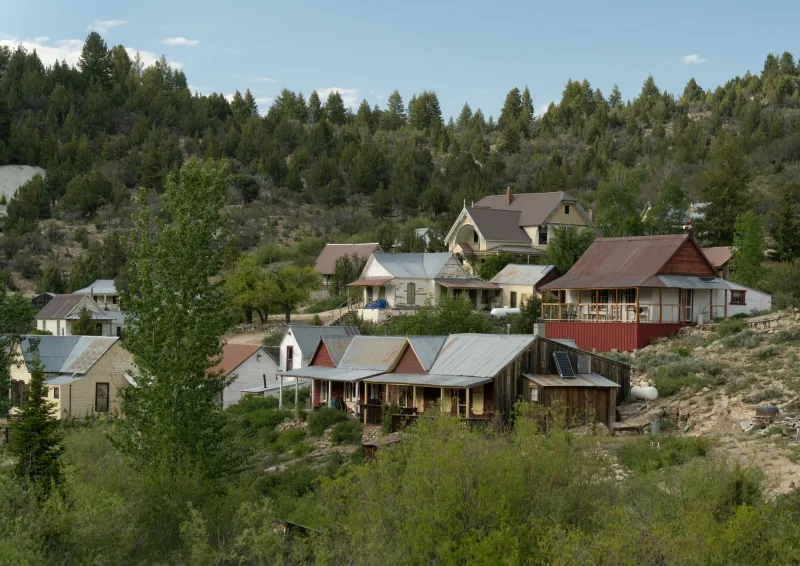
There's a particular kind of silence that people in deeply isolated communities talk about — the kind you can actually hear. Not the absence of noise, exactly, but the presence of something older. Wind through a holler. Ice shifting on a river. The sound of a world that hasn't been paved over yet.
Across the United States, pockets of people live in ways that look, from the outside, like they've been skipped by history. No broadband. No chain stores. Sometimes no road. And yet the people who call these places home aren't waiting to be rescued. They're doing just fine, thanks. Understanding why they stay — and what it costs them, and what it gives them — tells you something real about the American character that no highway exit sign ever could.
The Hollow That Connectivity Forgot
Deep in the mountains of eastern Kentucky and West Virginia, communities tucked into creek-fed hollows have been navigating their own particular form of separation for well over a century. Some of these places — locals call them "hollers" — sit at the end of roads that dead-end into the hillside. Cell service is spotty at best, nonexistent at worst. Broadband infrastructure, despite years of federal promises, remains a distant rumor.
What you find instead is a density of community that's genuinely hard to explain to someone who's never experienced it. Neighbors know each other's business not because they're nosy, but because shared survival demands it. Folks who grow up here often describe a kind of social fabric that feels almost incomprehensible in a world of Ring doorbells and DoorDash.
"People ask why I don't move somewhere with more opportunity," one lifelong resident of a small McDowell County community told a community journalist a few years back. "I ask them: opportunity to do what, exactly?"
That question doesn't have an easy answer. And that's kind of the point.
Alaska: Isolation as a Way of Life, Not a Limitation
If Appalachia represents isolation by geography, rural Alaska represents isolation as a foundational condition. There are over 200 communities in Alaska that have no road connection to the state highway system whatsoever. You get there by small plane, by boat, or in winter, by snowmachine across frozen terrain. Some of these villages have populations under 100 people. Some have been continuously inhabited for thousands of years.
The Yup'ik communities along the Yukon-Kuskokwim Delta are among the most striking examples. Life here still runs on seasonal rhythms — hunting, fishing, gathering — that predate any concept of America as a nation-state. Residents navigate subsistence lifestyles alongside smartphones and satellite internet, a combination that looks like contradiction from the outside but feels like continuity from the inside.
The challenges are real and shouldn't be romanticized. Access to medical care is genuinely difficult. The cost of goods flown in by bush plane is staggering. Climate change is actively threatening the physical land some of these villages are built on, with coastal erosion forcing entire communities to consider relocation for the first time in generations.
And still, people stay. Or they leave for a while and come back. Because the place is the identity, and the identity doesn't pack up easily.
The Desert Communities Nobody Passes Through
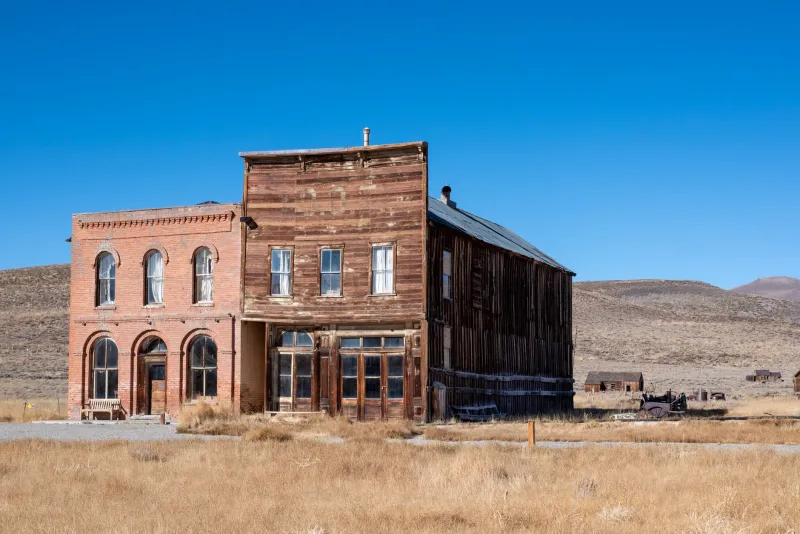
Shift the map to the American Southwest and you find a different kind of cut-off. In the canyon country of Utah and Arizona, and scattered across the Sonoran Desert into New Mexico, there are communities that exist at the end of two-track dirt roads — or no road at all — where the isolation is less about poverty and more about deliberate choice.
Havasupai, deep inside the Grand Canyon, is perhaps the most famous example. The village of Supai sits at the bottom of a canyon accessible only by an eight-mile trail or helicopter. The Havasupai people have lived here for centuries. Tourism brings visitors who hike in for the famous turquoise waterfalls and hike back out. The community itself stays put, year-round, in one of the most physically remote inhabited places in the lower 48.
Less famous are the small ranching families and off-grid homesteaders scattered across the Great Basin and high desert who've made a point of staying beyond the reach of municipal water, zoning codes, and Amazon delivery windows. Some are motivated by religious conviction. Some by libertarian philosophy. Some by a simpler calculation: they tried the connected world and found it lacking.
What Gets Lost When Everything Gets Connected
There's a version of this story that frames isolated communities as problems to be solved — places waiting for fiber-optic cable and economic development to bring them into the modern age. And there are genuine needs in many of these communities that deserve real policy attention. Healthcare access, educational resources, emergency services — these aren't romantic abstractions.
But there's another version of this story worth sitting with. One that asks what happens to local knowledge, oral tradition, and community cohesion when a place gets "connected." The evidence from communities that have gone through rapid infrastructure transformation is genuinely mixed. Broadband brings information. It also brings the attention economy, algorithmic distraction, and the slow homogenization of local culture into something that looks increasingly like everywhere else.
Some researchers who study rural American identity argue that the communities most resistant to outside integration are also the ones with the strongest sense of internal continuity — the clearest answer to the question "who are we and where do we come from?"
That's not nothing.
The Choice to Stay
What ties these communities together — the Appalachian holler, the Alaskan village, the desert enclave — isn't poverty or stubbornness, though both of those things exist. It's a particular relationship to place that most Americans have traded away so gradually we didn't notice the loss.
When you ask people in these communities why they stay, you rarely get a simple answer. You get stories. About grandparents buried in the hillside behind the house. About the specific way the light hits the river at a certain time of year. About knowing every person you're likely to run into on a given day and having actual history with all of them.
None of that shows up in a quality-of-life index. None of it gets measured in median income statistics or broadband penetration rates. But it's real, and it matters, and the people who have it know something the rest of us are still trying to figure out.
The world 1Wiki is built on — shared knowledge, community-driven understanding, the idea that different perspectives make the picture fuller — owes something to exactly this kind of place. The communities that held onto their own ways of knowing, even when it would have been easier to let go.
They're still out there. And they'd like you to know they're doing just fine.