You're Not on Route 66 Anymore: The Hidden Truth About America's Most Mythologized Roads
You're Not on Route 66 Anymore: The Hidden Truth About America's Most Mythologized Roads
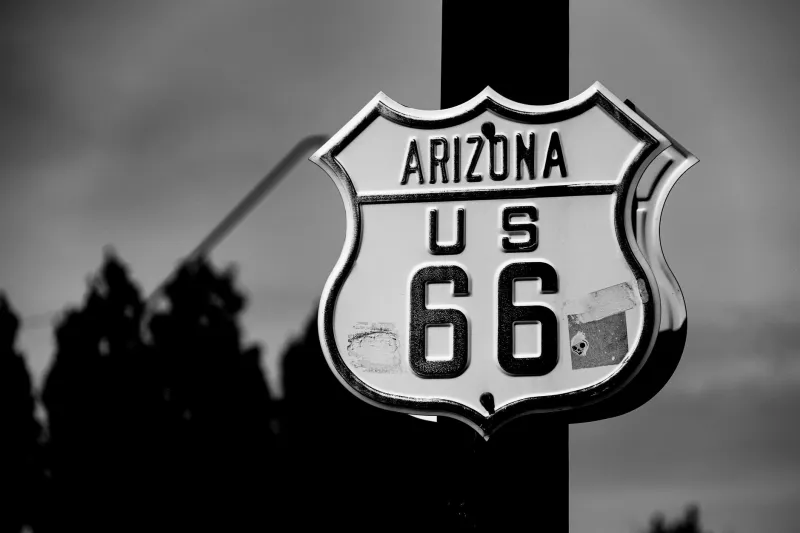
There's a certain kind of traveler — and honestly, most of us have been this person at least once — who pulls up to a faded shield-shaped sign on the side of some sun-baked two-lane highway and feels like they've arrived. Like they're in it. The American road trip, in its purest form. Wind in the hair, open horizon, the whole deal.
Except here's the thing nobody puts on the postcard: the road you're standing on might not be the road you think it is. Not really. America's most iconic highways — the ones that inspired songs, novels, and a genuinely overwhelming number of diner murals — have been quietly redrawn, bypassed, and renumbered over the decades. The myth stayed intact. The asphalt moved on without it.
The Route 66 Problem (Yes, There's More Than One)
Let's start with the big one. Route 66 — the "Main Street of America," the road that Steinbeck immortalized and the Nat King Cole song made feel like a warm hug — was officially decommissioned in 1985. It no longer exists as an official U.S. highway. Full stop.
What you're driving when you follow the brown "Historic Route 66" signs is a patchwork of state-designated heritage corridors, some of which closely follow the original path, and some of which... don't. The original Route 66 was actually realigned multiple times between its 1926 designation and its eventual removal from the U.S. Highway System. Towns like Joliet, Illinois, and Amarillo, Texas, saw the road shift around them as traffic demands changed. Some stretches were absorbed into the Interstate Highway System. Others just stopped being maintained and crumbled back into the prairie.
So when you pull into a Route 66 tourist trap — and we say that with full affection — you might be standing on the 1940s alignment, the 1950s alignment, or a totally different road that someone decided to rebrand for tourism purposes. The community knowledge around this is actually pretty rich; road historians and enthusiast groups have spent decades mapping which segments are "original" and which are later versions. It's collaborative cartography at its most obsessive, and honestly, it's kind of beautiful.
The Lincoln Highway's Identity Crisis
Route 66 gets all the glory, but the Lincoln Highway has a stranger story. Established in 1913 as the first transcontinental road for automobiles, it ran from Times Square in New York City all the way to Lincoln Park in San Francisco. It was a genuine marvel — a coast-to-coast route stitched together from existing roads and new construction, promoted by a group of automobile enthusiasts who basically willed it into existence through sheer promotional energy.
Here's the catch: the Lincoln Highway was never an official government route. It was a privately promoted corridor, and as the federal highway numbering system rolled out in the 1920s, pieces of it got absorbed into U.S. 30, U.S. 40, U.S. 1, and several other numbered routes. The name disappeared from official maps almost entirely.
Today, there's a Lincoln Highway Association that has done heroic work reconstructing the original path, but the route they've mapped passes through towns that have been bypassed by interstates, over bridges that have been replaced, and along alignments that no longer connect in any practical way. In some stretches, the "original" Lincoln Highway is a dirt farm road. In others, it's been paved over by a Walmart parking lot. The romance is real; the continuous drivable path is considerably more theoretical.
Why Bypasses Changed Everything
The biggest villain in this story — if you want to call it that — is the bypass. When the Interstate Highway System started taking shape in the 1950s, the federal government wasn't just building new roads. It was systematically redirecting traffic away from the downtowns and main streets that had grown up around the old U.S. highway system.
For towns along Route 66, U.S. 40, or the old Lincoln Highway corridor, a bypass could mean economic death. Traffic that once rolled through the center of town, stopping at diners and motor courts and filling stations, now sailed past at 70 miles per hour without a second glance. Some towns fought back. Some adapted. A lot of them just quietly hollowed out.
What this means for the traveler is that the "authentic" version of these roads — the version that exists in the cultural imagination, lined with neon signs and classic Americana — is largely a product of a very specific window of time, roughly the 1940s through the early 1960s. What survives today is a curated remnant, preserved in some places by dedicated local communities and in others by accident.
The Renumbering Nobody Talks About
Here's a piece of road history that doesn't get nearly enough attention: the U.S. highway numbering system has been revised more times than most people realize. Routes have been extended, truncated, split, and reassigned. U.S. 66 was decommissioned, but other routes have undergone quieter transformations that still confuse travelers today.
U.S. 1, for example, is technically a continuous route running from Fort Kent, Maine, to Key West, Florida — but the road has been rerouted around so many cities and suburbs over the decades that "U.S. 1" can mean a six-lane commercial strip in New Jersey, a scenic coastal highway in Maine, and a crumbling two-lane road through rural Georgia, all under the same number. The number is consistent. The experience is anything but.
So What Are You Actually Driving?
None of this is meant to ruin your road trip. Genuinely. The point isn't that these roads are fake or that the experience of driving them is somehow fraudulent. The point is that the gap between the map and the myth is itself a fascinating piece of American history.
The roads changed because America changed. The bypasses happened because people wanted to get places faster. The renumbering happened because the system needed to grow. And the mythology stuck around because Americans needed it to — because the open road is one of the most durable pieces of national identity this country has ever produced.
What's actually cool, if you're the kind of person who goes deep on this stuff, is that the detective work of finding the "real" route — the original alignment, the pre-bypass main street, the bridge that's been there since 1930 — has become its own subculture. Road geeks, local historians, and enthusiast communities have built out an impressive body of shared knowledge around exactly this kind of cartographic archaeology. Places like this one exist precisely because that kind of collective curiosity deserves somewhere to live.
So yeah, you might not technically be on Route 66. But the road you're actually on? It has its own story. You just have to know where to look.