Blink and You'll Miss It: The American 'Cities' That Are Really Just a Pump and a Prayer
Blink and You'll Miss It: The American 'Cities' That Are Really Just a Pump and a Prayer
There's a particular flavor of road trip disappointment that seasoned American travelers know well. You've been driving for three hours through flat, featureless highway, and your phone finally announces — with genuine enthusiasm — that you've arrived at your destination. You look left. You look right. There's a gas station with one working pump, a cooler full of questionable hot dogs, and a hand-painted sign that may or may not be a joke. This, apparently, is the city of Wheatland Corners, population: optimistic.
This is not an isolated experience. Across the United States, thousands of named places appear on maps, GPS systems, and even official travel guides that, when visited in person, reveal themselves to be something significantly humbler than advertised. A crossroads. A grain elevator. A single blinking traffic light presiding over nothing in particular. And yet there they are — named, pinned, and sometimes even listed with a zip code.
So what's actually going on here?
The Map Is Not the Territory (Especially in America)
Cartographic ambition has always outpaced reality in the United States. When early mapmakers were charting the interior of the country, they needed to fill space. A hopeful settlement with twelve residents and a post office could reasonably be labeled a "town" — because who knew? Maybe it would grow. Maybe the railroad would come through. Maybe gold would be discovered under the feed store.
The railroad didn't always come. The gold usually wasn't there. But the name stuck.
Digital mapping hasn't helped. Google Maps, Apple Maps, and various GPS platforms inherit data from layers of historical records, postal databases, and census designations that were created under wildly different assumptions than those of a modern traveler looking for a lunch stop. A place that once qualified as a "populated place" in a federal database — even if it was only ever marginally populated — can persist indefinitely in the digital map ecosystem long after the last resident packed up and left.
The result is a kind of phantom geography: America as it was hoped to be, superimposed over America as it actually turned out.
Real Examples, Real Disappointment
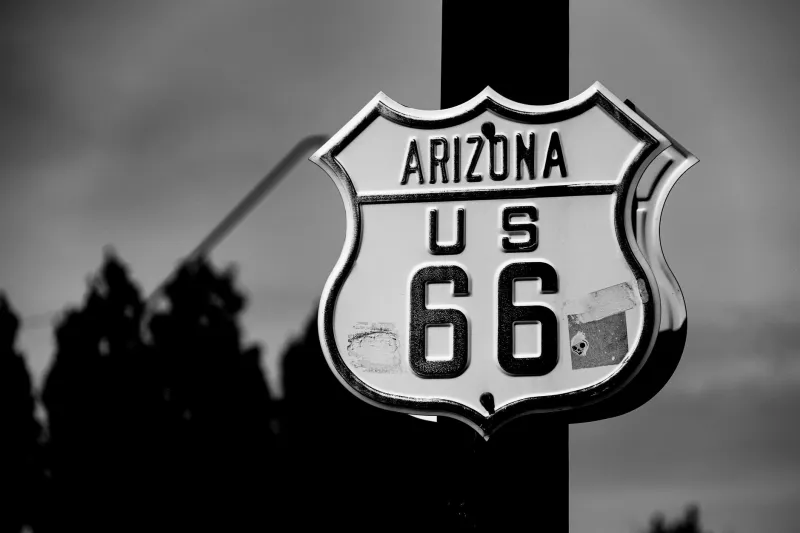
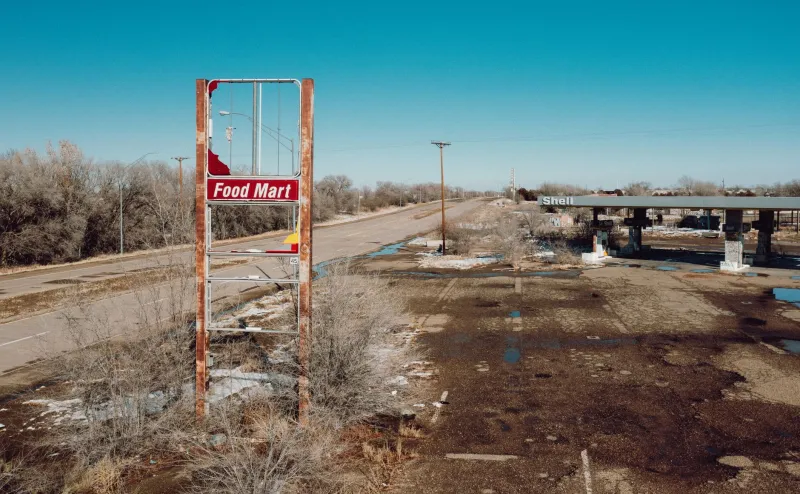
Take Glenrio, straddling the Texas-New Mexico border on old Route 66. It shows up on maps with a confident little dot. Road-trippers seeking a quirky stop discover a ghost town so thoroughly abandoned that the gas station's concrete islands have grass growing through the cracks. Beautiful in its own way — but not exactly the pit stop you were banking on.
Or consider Monowi, Nebraska, which technically holds the distinction of being the only incorporated municipality in the United States with a single resident. Elsie Eiler is simultaneously the mayor, the librarian, and the bartender. She issues her own liquor license to herself. Monowi is absolutely real, genuinely charming, and completely unlike what you'd expect when a map labels something a "village."
Then there's Lost Springs, Wyoming — population one, as of recent counts — which nevertheless maintains a town government because the paperwork to dissolve it seems like more trouble than it's worth. The internet has written approximately four thousand articles about it. The town itself has not read any of them.
These places aren't frauds. They're just survivors of a labeling system that was never designed to be updated.
Why Local Pride Keeps the Legend Alive
Here's where it gets genuinely interesting, and where the 1Wiki community has surfaced some unexpected perspectives: the people connected to these places — former residents, descendants, and occasionally the one person still living there — often have complicated feelings about the attention.
On one hand, there's pride. Having a name on a map means you existed. It means someone thought your corner of the world mattered enough to mark. For communities that have largely emptied out due to economic shifts, agricultural consolidation, or simple bad luck, that dot on the map is a kind of memorial.
On the other hand, there's the tourist who shows up expecting a charming small town and instead photographs a collapsed water tower, then posts it with a caption like "lol this place" — which, understandably, doesn't sit great with the families who grew up there.
Local chambers of commerce in surrounding areas sometimes actively maintain the mythology of a nearby ghost designation because it draws curious travelers onto regional highways, where they might stop at an actual functioning business. It's a tourism ecosystem built partly on fiction, and it works.
What Your GPS Is Actually Telling You
The gap between map label and lived reality is widest in a few specific types of American geography. Rural crossroads in the Great Plains, where towns were platted in anticipation of agricultural booms that never materialized. Desert Southwest communities that existed to serve a mine or a railroad junction, neither of which is operational anymore. Appalachian hollows where a cluster of family homesteads once qualified as a settlement by 19th-century standards.
In these regions, it's genuinely useful to cross-reference your GPS with satellite imagery before committing to a detour. If the overhead view shows nothing but scrubland interrupted by a single structure with a collapsed roof, manage your expectations accordingly.
That said — and road-trippers who've shared their stories here on 1Wiki will back this up — some of the most memorable stops on any American road trip are exactly these kinds of places. The gas station that somehow also sells homemade tamales and vintage belt buckles. The "town" that's really just a diner where everyone inside knows everyone else and you are a fascinating anomaly. The crossroads with a historical marker that tells a story nobody outside a thirty-mile radius has ever heard.
The Destination That Wasn't (But Kind of Was)
There's a philosophical argument — stay with us here — that America's relationship with overhyped destinations says something true about the country itself. The United States was built on the premise of potential. Every patch of land was, theoretically, the future site of something great. Maps were drawn not just to record what existed but to assert what could exist. Some of those assertions aged better than others.
When you pull into a place that your GPS called a city and find a gas pump and a dog, you're not being lied to exactly. You're experiencing the gap between American optimism and American outcome — which is, when you think about it, a pretty central part of the national story.
Plus, sometimes that dog is really friendly. And the hot dogs are better than you'd expect.
Have you made a detour to a place that turned out to be basically nothing? We want to hear about it. Drop your story in the comments — the weirder the better. That's what 1Wiki is here for.