Still on the Books: The Ghost Towns America Refuses to Let Die
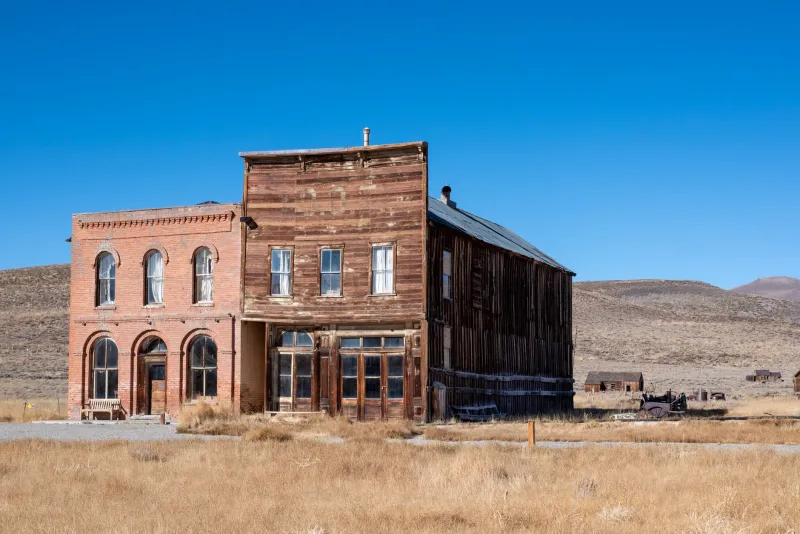
There's something deeply American about refusing to quit. We've built entire mythologies around it — the lone holdout, the stubborn homesteader, the last man standing. So maybe it shouldn't surprise anyone that the United States has dozens of officially incorporated municipalities where the population has cratered to almost nothing, yet the town itself keeps chugging along on paper, collecting its legal status like a badge of honor nobody asked for.
These aren't just crumbling storefronts at the edge of a highway. We're talking about places that still technically have governments. Some levy taxes. Some hold elections — occasionally with a candidate running unopposed for an office nobody else wanted. They exist in a strange administrative twilight zone, somewhere between a real community and a very elaborate piece of paperwork.
So what keeps them alive? And who, if anyone, is still home?
The Machinery Nobody Turned Off
Disincorporating a town isn't as simple as flipping a switch. In most states, the process requires a formal vote, legal filings, and often the approval of a county government that may not be in any hurry to absorb the liability. Property tax structures get complicated. Outstanding debts need resolution. And if even one or two residents object — or if a landowner sees value in keeping the municipal designation for zoning or tax purposes — the whole dissolution can stall indefinitely.
That bureaucratic friction is exactly why places like Monowi, Nebraska still technically exist as an incorporated village. You've probably heard of Monowi. It's been a minor media fascination for years because, as of recent census counts, its entire population is one person: Elsie Eiler, who serves as the village's mayor, clerk, and treasurer simultaneously. She grants herself a liquor license for the tavern she runs. She approves her own annual budget. She is, in the most literal sense, the government.
It sounds like a punchline, but Elsie's situation is actually a fairly tidy illustration of how these places function. The legal framework doesn't require a minimum number of residents to stay incorporated — it just requires that someone keep filing the right paperwork. As long as someone does, the town lives.
Boomtowns That Busted Hard
A lot of America's ghost municipalities share a common origin story: they were born fast and died faster, usually tied to a single extractive industry. Silver. Coal. Copper. Timber. When the resource dried up or the railroad rerouted, entire communities evaporated within a generation.
Central, Colorado is one of the more interesting cases. Once a roaring gold-rush city in the 1860s — locals called it the "Richest Square Mile on Earth" — it shrank dramatically after the mining played out. But unlike a lot of its contemporaries, Central never fully let go. It eventually leaned into its own history, cultivating a gambling and tourism economy that brought it back from the edge. Today it's a functioning small city again, though its population remains a fraction of its peak.
Not every mining town got that second act. Thurmond, West Virginia tells a starker story. At its height in the early 1900s, Thurmond was a critical coal shipping hub on the Chesapeake and Ohio Railway, with a bank, hotels, and a level of commercial activity that outpaced much larger towns in the region. Then the coal economy collapsed, the railroad traffic dried up, and Thurmond's population fell off a cliff. Today, fewer than five people live there — but it remains an incorporated municipality. The National Park Service now manages much of the town as part of the New River Gorge National Park, which gives Thurmond a kind of preserved-in-amber quality. The buildings are real. The history is real. The community, in any conventional sense, is mostly gone.
Water, Weather, and the Towns That Got Left Behind
Not every ghost town was killed by a mine closing. Some were simply in the wrong place when the water rose — or when it disappeared entirely.
Valmeyer, Illinois offers one of the more dramatic examples of a town that moved rather than died. After catastrophic flooding from the Mississippi River in 1993, the entire community relocated two miles uphill. The original townsite was largely abandoned, but the municipal identity — the name, the legal status, the community bonds — survived the move. Valmeyer essentially picked itself up and walked away from its own geography. That's not exactly a ghost town scenario, but it points to something real: place names and civic identities can outlast the physical places they were attached to.
Deep in the Southwest, you'll find towns that were slowly strangled by drought. Some agricultural communities in the Texas Panhandle and eastern New Mexico shrank so severely during the Dust Bowl era and subsequent dry cycles that they exist today in name only — a post office designation, maybe a grain elevator, a cluster of addresses that technically belong to a municipality nobody governs in any meaningful way.
The Holdouts and What They're Holding Onto
The people who stay in these places — the Elsie Eilers of the world — tend to get asked the same question constantly: why? And the answers are almost never simple.
Sometimes it's property. Land that's been in a family for generations, and leaving feels like a betrayal of the people who worked it. Sometimes it's stubbornness in the most admirable sense — a refusal to let outside economic forces dictate the terms of your life. And sometimes it's something harder to name, a connection to a place that persists even after the place has largely stopped existing in any practical sense.
There's also a preservation angle that's become increasingly prominent. Historic preservationists, architectural enthusiasts, and heritage tourism advocates have started paying closer attention to these lingering municipalities, arguing that their legal status is actually an asset. An incorporated town has standing to apply for certain grants, to engage with state agencies, and to push back against development or demolition in ways that an unincorporated ghost site simply can't. Keeping the legal framework alive, even when the population is essentially zero, gives advocates a tool they wouldn't otherwise have.
What These Places Are Really Telling Us
At 1Wiki, we're always interested in what the specifics reveal about the bigger picture — and ghost towns that refuse to die reveal quite a bit. They're a window into how American civic identity gets constructed and maintained, how property rights and legal structures can outlast the human communities they were built to serve, and how the mythology of the small American town persists even when the town itself is mostly memory.
They also remind us that maps and official records are, at best, an approximation of reality. A dot on a map labeled with a town's name carries a certain weight — it implies permanence, community, a place where people live their lives. But sometimes that dot is just Elsie, running the whole show herself, keeping the paperwork current and the tavern open.
And honestly? There's something kind of wonderful about that.