Still Open: The American Businesses That Have Been Running Since Before Your Great-Great-Grandmother Was Born
Most businesses don't make it past five years. That's the stat everyone throws around, and while the actual numbers are a little more nuanced, the underlying truth holds: keeping a business alive is genuinely hard. Keeping one alive for three hundred years is something else entirely.
Across the United States, there's a small, stubborn collection of establishments that have been operating continuously since the colonial period or the earliest days of the republic. Not restored. Not reimagined. Not a modern shop that borrowed an old name for branding purposes. Actually, continuously, uninterruptedly open — through the Revolutionary War, the Civil War, the Great Depression, two World Wars, the rise of Walmart, and a global pandemic. The fact that any of them exist at all is, depending on your mood, either deeply inspiring or completely baffling.
Let's dig into a few of them, because each one is essentially a compressed history of America told through receipts.
The Tavern That Outlasted a Revolution
When you walk into Fraunces Tavern in lower Manhattan, you're stepping into a building that has been serving food and drink since 1762. That's not a typo. George Washington famously delivered his farewell address to his officers there in 1783, and the place has been operating in some form ever since. It's technically a museum-restaurant hybrid today, which some purists might quibble with, but the continuous presence of the building as a functioning public space is hard to argue with.
What makes Fraunces Tavern interesting isn't just its age — it's the way it became part of the neighborhood's identity rather than a curiosity sitting awkwardly inside it. Lower Manhattan has changed beyond recognition in the past century alone. The tavern hasn't moved. The city just grew around it, and somehow the city kept deciding the tavern was worth keeping.
That pattern — community deciding, again and again, that a place deserves to survive — shows up in nearly every story on this list.
The Hardware Store Where Nothing Changes (On Purpose)
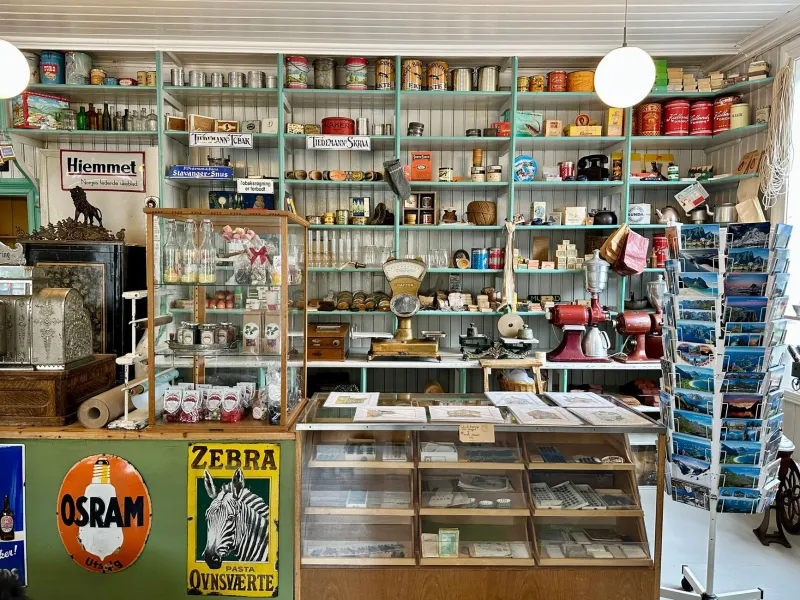
In small-town America, the oldest continuously operating businesses tend not to be glamorous. They're hardware stores, general mercantiles, and grain suppliers — places that survived because they were genuinely useful, not because they were charming. Mast General Store in Valle Crucis, North Carolina, has been selling goods from the same location since 1883. The building still has its original wooden floors and a barrel of penny candy near the register. It's not performing nostalgia. It's just... still there.
What's remarkable about places like Mast is how they managed to survive the chain store era. The answer, almost universally, is that they didn't try to compete on price. They competed on specificity — the staff who knew exactly which bolt fit which old farmhouse door, the institutional knowledge that no big-box store could replicate even if it wanted to. When Lowe's opened nearby, customers still drove past it to get to Mast. That's not sentimentality. That's a value proposition.
The Pharmacy That Predates Germ Theory
Some of the most quietly extraordinary old businesses in America are apothecaries and pharmacies that have been filling prescriptions — or their historical equivalents — since before anyone understood how disease actually worked. Rexall Drug in various incarnations, independent compounding pharmacies in New England towns, apothecary shops in Philadelphia that date to the 1700s — these places have witnessed medicine transform from herbal tinctures and bloodletting to antibiotics and mRNA vaccines, all while keeping the same address.
Morris W. Haft & Brother in New York operated as a pharmacy for over a century before finally closing. But the ones that are still running share a common trait: they became indispensable to their neighborhoods in ways that transcended commerce. The pharmacist knew your name. Knew your family's medical history. Knew when you were going through something hard because your prescription changed. That relationship — genuinely irreplaceable by an app or a drive-through pharmacy window — is what kept customers coming back across generations.
What Survival Actually Requires
If you talk to the owners or historians connected to these businesses, a few themes keep surfacing.
Adaptability within identity. The places that lasted didn't stay frozen in amber. They updated their inventory, added services, modernized their bookkeeping. But they never abandoned the core thing that made them them. A tavern that started serving craft beer alongside its colonial-era menu isn't betraying its heritage. It's extending it.
Family, but not always blood family. Many of these businesses have passed through multiple families over the centuries — sold, inherited by employees, transferred to community organizations. The continuity isn't always genetic. It's more like a baton pass, where each new owner takes on a stewardship role rather than an ownership role. They're not running a business so much as maintaining an institution.
Location as anchor. Almost none of the oldest businesses in America relocated voluntarily. They stayed in their original buildings, or as close to them as fires and floods allowed. That physical rootedness creates a kind of community memory. The building itself becomes a landmark, and the landmark becomes something people feel responsible for protecting.
Community buy-in. This might be the biggest one. Every ancient business on this list has survived partly because the surrounding community decided it should survive. People chose to shop there when it would have been easier to go somewhere else. Local governments sometimes stepped in with historic preservation support. Neighbors rallied after fires or floods. The business and the community entered into a kind of unspoken contract: we'll keep showing up if you keep staying open.
What They Tell Us About the Places That Kept Them
Here's the thing about a three-hundred-year-old tavern or a century-and-a-half-old hardware store: it doesn't just tell you about the business. It tells you about the town.
A community that keeps an old business alive is a community that values continuity. That doesn't mean it's resistant to change — most of the towns with the oldest operating businesses are perfectly normal, functioning, evolving places. But they've made a collective decision, usually unconscious and unspoken, that some things are worth preserving even when preservation is inconvenient.
That's a genuinely interesting cultural statement. In a country that tends to fetishize the new — new development, new brands, new everything — the existence of a business that's been open since 1750 is almost a form of quiet protest. We were here before you got here, the old tavern sign seems to say. We'll probably be here after you're gone.
The Ones We Almost Lost
For every ancient business still operating today, there are dozens that almost made it but didn't. A fire in 1987. An owner who died without a succession plan. A landlord who sold the building to a developer. The margin between survival and closure, even for beloved institutions, is often terrifyingly thin.
Which is part of why the ones that are still running feel so significant. They made it through not just the big historical catastrophes — wars, depressions, pandemics — but also the small mundane disasters that kill most businesses quietly and without ceremony.
Next time you pass an old hardware store or a tavern with a weathered sign and a founding date over the door, it might be worth stopping in. Not out of obligation, and not because old things are automatically better. But because something that has stayed open that long, through that much, is telling a story about the place it lives in — and that story is probably worth knowing.
Know of an old business in your town that deserves a spotlight? Drop it in the comments. This is exactly the kind of local knowledge that makes 1Wiki what it is.