51st, 52nd, Maybe Never: The States America Almost Had
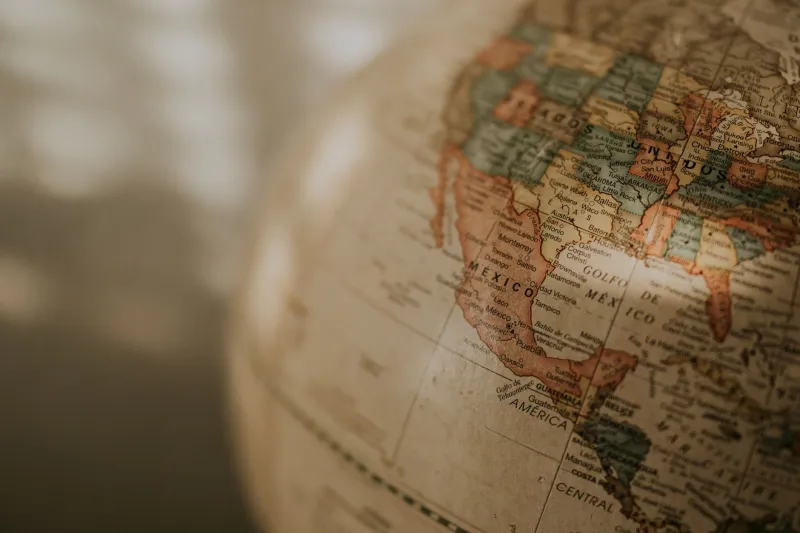
Pull out a map of the United States and it looks like destiny — fifty neat-ish shapes filling out the continent like puzzle pieces that were always meant to fit together. But that map is the product of backroom deals, failed votes, racist politics, and a shocking amount of pure luck. At least a dozen serious statehood bids never made it past Congress, and some of them came agonizingly close. Welcome to the alternate history hiding inside your own country.
Transylvania: Yes, Really
Before Kentucky was Kentucky, a land speculator named Richard Henderson had a different vision. In 1775, Henderson's Transylvania Company purchased a massive chunk of land from the Cherokee Nation and promptly declared it the fourteenth American colony. He even hired Daniel Boone to blaze the Wilderness Road into the territory. The Continental Congress, however, wasn't buying it — literally. They refused to recognize the purchase, Virginia and North Carolina both claimed chunks of the land, and Transylvania quietly evaporated as a political entity.
It's one of the earliest examples of a pattern that would repeat itself across American history: a community with genuine momentum, a functioning local government, and a name already picked out — only to get squashed by larger political forces that had other plans for the real estate.
The State of Franklin: Tennessee's Rebellious Predecessor
In 1784, North Carolina ceded its western territory to the federal government and then almost immediately took it back. The settlers who'd already moved there were furious. Rather than wait around for politicians hundreds of miles away to figure out what to do with them, they formed their own state and named it Franklin — after Benjamin Franklin, who they hoped would be a useful ally.
For four years, the State of Franklin had its own governor, its own legislature, and its own set of laws. It even conducted foreign policy, negotiating directly with Native American nations. But Franklin never got the congressional votes it needed for official statehood, North Carolina reasserted control, and the whole experiment collapsed by 1788. The land eventually became part of Tennessee. Today, you can find the name Franklin scattered across the state — a quiet memorial to a government that almost was.
Sequoyah: The Indigenous State That Congress Ignored
This one stings. In 1905, the Five Civilized Tribes — the Cherokee, Choctaw, Chickasaw, Creek, and Seminole nations — held a constitutional convention in Muskogee and drafted a proposal for a new state called Sequoyah, named after the Cherokee scholar who created the Cherokee syllabary. They wrote a full constitution, elected a governor, and sent a delegation to Washington with a formal statehood application.
The proposal was detailed, democratic, and backed by a population of roughly 250,000 people. Congress rejected it anyway. Two years later, in 1907, the federal government merged the proposed Sequoyah territory with Oklahoma Territory and admitted them together as a single state. Oklahoma. The name Sequoyah survives today only as a county — a footnote to a statehood bid that deserved far better.
A Black Majority State in the Reconstruction South
During Reconstruction, there were serious discussions — and some formal proposals — around carving out a state in the Deep South with a Black majority population that could exercise genuine political power. The idea never coalesced into a single unified movement, but it surfaced in various forms throughout the 1860s and 1870s, particularly in areas of South Carolina and Mississippi where freed people outnumbered white residents.
The window for anything like this slammed shut with the end of Reconstruction in 1877. Federal troops withdrew, white supremacist governments took over across the South, and the political infrastructure that might have supported such a state was systematically dismantled. It remains one of the most haunting "what ifs" in American history — a path toward a genuinely different kind of representation that was deliberately blocked.
Jefferson: The State That Won't Quit
Some proposed states are historical curiosities. Jefferson is something else entirely. The movement to split Northern California and Southern Oregon into a new state called Jefferson has been kicking around since 1941, when the town of Yreka staged a mock secession and blocked the highway with armed residents. Local grievances were real: rural communities felt ignored by distant state capitals more focused on coastal population centers.
The movement got shelved when Pearl Harbor happened and everyone had bigger things to worry about. But it never died. Jefferson enthusiasts have revived the cause multiple times since then, most recently in the 2010s when several Northern California counties passed non-binding resolutions supporting statehood. There's a Jefferson Public Radio. There are Jefferson bumper stickers. There's a whole identity built around a state that doesn't exist.
The practical obstacles are enormous — Congress would have to approve it, and California's legislature would have to consent to being divided, which isn't happening anytime soon. But the fact that the movement has survived for more than eighty years says something real about how communities feel when they believe the political system has written them off.
Why Does Any of This Matter?
It's tempting to treat these failed statehood bids as trivia — fun facts for a road trip through the American interior. But they're actually a pretty direct window into how power works. Every one of these proposals was rejected for reasons that had nothing to do with whether the territory was ready for statehood and everything to do with political calculation: which party would benefit, which existing states would lose congressional influence, which economic interests would be disrupted.
Sequoyah was rejected partly because Oklahoma statehood gave Congress an opportunity to dilute Native American political power rather than concentrate it. The Black majority state proposals died because they threatened the white power structure being rebuilt across the South. Franklin and Transylvania were squashed by states that didn't want to give up land or influence.
The 50-star flag isn't just a count of places that qualified. It's a count of places that qualified and had the right political timing and didn't threaten the wrong people's interests. That's a much shorter list.
The Map We Almost Had
If history had zigged instead of zagged, your atlas might show a state called Absaroka (carved from parts of Wyoming, Montana, and South Dakota in the 1930s), or Nickajack (a proposed Unionist state in the Appalachian South during the Civil War), or any number of other territories that generated real political energy before fizzling out.
Some of these names are genuinely beautiful. Sequoyah. Absaroka. Even Transylvania has a kind of wild poetry to it. They're reminders that the country you live in is one version of America — the version that survived the voting, the dealmaking, and the occasional armed standoff on a mountain highway. Other versions were possible. Some people are still fighting for them.
Next time you look at that 50-star flag, maybe count a little slower. There are ghosts in those stripes.