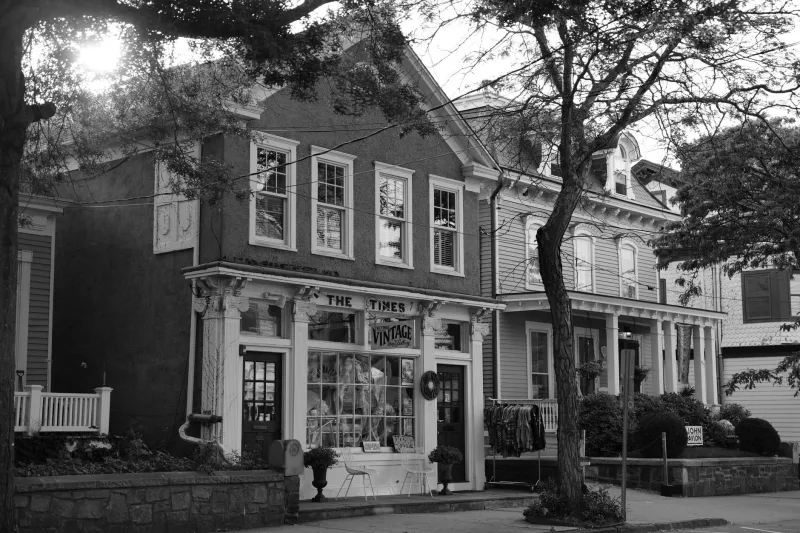
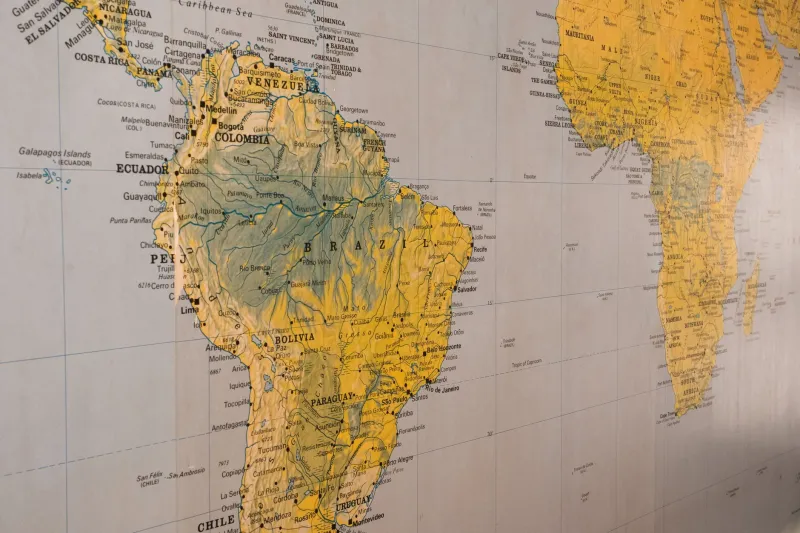
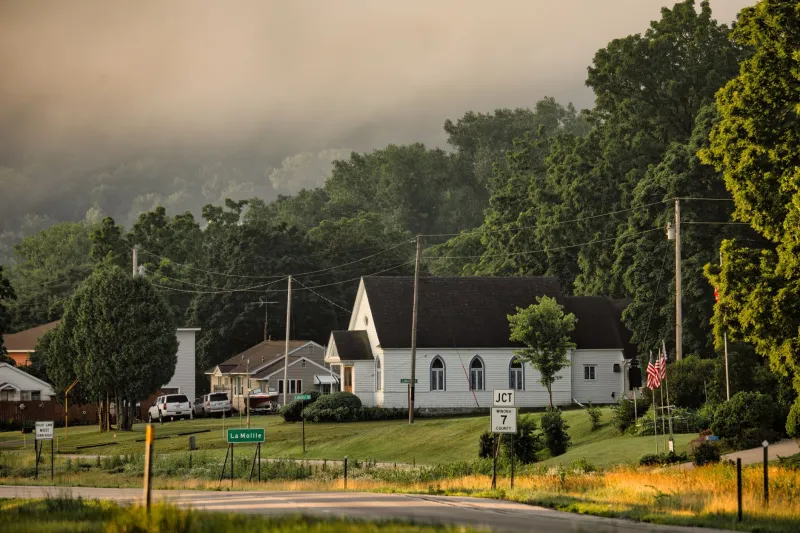
Your Hometown Doesn't Exist (And Nobody Seems to Mind)
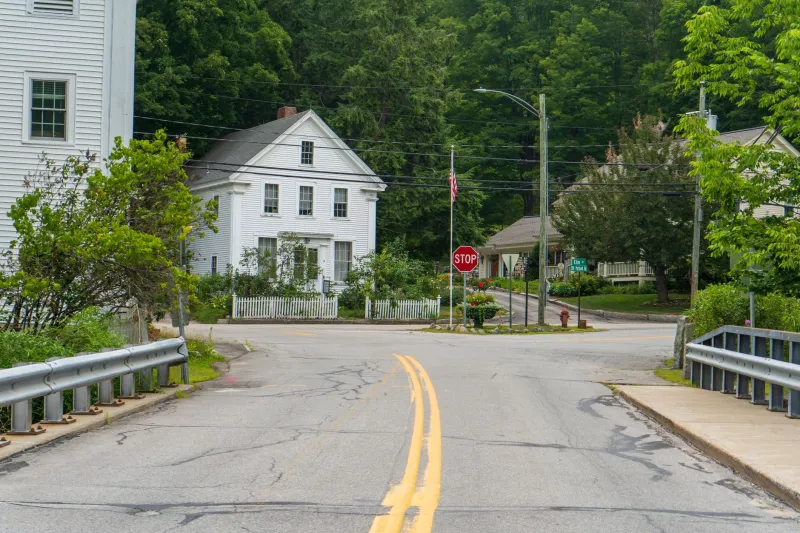
Your Hometown Doesn't Exist (And Nobody Seems to Mind)
Ask someone where they're from, and they'll tell you without hesitation. Maybe it's Stringtown, Oklahoma. Maybe it's Scratch Ankle, Alabama. Maybe it's a crossroads community in rural Montana that shows up on exactly zero official government documents. They'll say the name with pride, maybe even a little defiance. And if you look it up on a state municipal registry, you'll come up empty.
Welcome to the world of unincorporated communities — the places that exist in every practical sense except the one the government cares about.
What Does 'Unincorporated' Actually Mean?
Here's the quick civics refresher: when a town incorporates, it becomes a legal municipality. It gets a charter, a mayor or council, the ability to levy taxes, pass ordinances, and show up in official records. Incorporation is, essentially, a community raising its hand and saying, we're official now.
Unincorporated communities never raised that hand. They sit inside county boundaries and fall under county jurisdiction, but they have no independent municipal government of their own. No mayor. No city council. Often no formal zoning. In some cases, not even a dedicated post office.
And yet — people live there. Businesses operate. Kids grow up, move away, and spend the rest of their lives explaining to people that yes, the place is real, it just doesn't technically exist on paper.
The Census Bureau actually tracks many of these spots under the label "census-designated places," or CDPs. There are over 5,000 of them across the country. But plenty of communities don't even make that list — they're purely informal, known only by locals, old road signs, and the occasional hand-painted wooden marker nailed to a fence post.
The Tax Angle (It's Always the Tax Angle)
Let's be honest about one of the biggest reasons communities stay off the books: money. Incorporation comes with costs. Running a municipal government isn't free. You need staff, infrastructure funding, administrative overhead. And the moment a community becomes an official town, residents often start paying municipal taxes on top of their county taxes.
For rural and semi-rural areas with older, fixed-income populations, that's a real deterrent. Why sign up for another tax bill when the county is already handling roads and emergency services — however imperfectly?
This calculation plays out across Appalachia, the rural South, the Great Plains, and pockets of the Mountain West. Communities that might have had the population to incorporate decades ago simply... didn't. And now the habit of not incorporating has calcified into something closer to identity.
Stubborn Independence as a Founding Principle
Taxes explain part of it. But talk to actual residents of these communities, and you'll hear something else underneath the financial logic: a genuine philosophical resistance to being governed more than necessary.
There's a particular strain of American thinking — deeply rooted, historically consistent — that views local government with suspicion. Not hostility, exactly, but a preference for handling things yourself, among neighbors, without a bureaucratic layer deciding what's allowed and what isn't.
Unincorporated communities are, in many ways, the physical expression of that instinct. They're places where disputes get settled at the feed store or the church parking lot rather than in front of a zoning board. Where the community pool, if there is one, was probably built by volunteers on a weekend. Where the notion of asking permission to put up a fence strikes people as faintly absurd.
This isn't just a rural phenomenon, either. Plenty of unincorporated communities sit right on the edges of major metro areas — suburban and exurban pockets that were deliberately never absorbed into the city they border. The residents made a choice, or their parents did, to stay just outside the line.
What You Actually Give Up
Living off the official map isn't without its complications. Emergency response times can be longer when your address doesn't cleanly resolve in a dispatch system. Getting a business license can require more paperwork because the county has to handle what a city would normally process. School district boundaries get messy. Infrastructure projects move slower when there's no local government to advocate for them.
Mail delivery has historically been a headache, though rural route addressing has smoothed that out considerably. Still, plenty of unincorporated communities share a zip code with a nearby town, which means residents are perpetually explaining that no, they don't actually live in that town, they just use its post office.
Property rights, on the other hand, tend to be broader. Without municipal zoning, you can often do more with your land than your counterparts in incorporated towns. Want to keep chickens? Run a small business out of your garage? Build a structure that would never pass a city permit review? In many unincorporated areas, the county's rules are the only rules — and county rules are frequently more permissive.
The Names That Stuck Anyway
One of the more charming side effects of this whole situation is that unincorporated communities often have the best names. Without any official naming body to sanitize things, the names that stuck tend to be the ones that organically attached themselves to a place — usually based on a geographic feature, a founding family, a peculiar event, or a descriptor that made sense to the people who lived there.
Places like Nameless, Tennessee (yes, that's the actual name — residents reportedly couldn't agree, so nameless it stayed). Or Noodle, Texas. Or Uncertain, Texas (there's a theme here). These weren't branded by a city council or a real estate developer. They just... happened, and then they stayed.
That informality is part of what makes these communities feel different. There's a texture to a place that named itself versus a place that was named by committee.
The Question of the Future
As remote work reshapes where Americans can live, some of these forgotten communities are seeing new residents for the first time in decades. Young families and remote workers are discovering that land is cheap, space is plentiful, and the commute doesn't matter if your office is a laptop on a kitchen table.
What happens when an unincorporated community suddenly starts growing? Sometimes it incorporates. Sometimes it resists and just absorbs the growth informally. Sometimes the tension between longtime residents who value the area's loose structure and newcomers who want more services plays out over years of contentious county meetings.
There's no single answer. That's kind of the point. These are places that have always written their own rules — or more precisely, avoided them wherever possible.
At 1Wiki, we think that's worth paying attention to. The places that technically don't exist are often the ones with the most to say about what Americans actually want from the places they call home. Sometimes the most revealing map is the one with the blank spaces.