Nobody Planned This: How America's Coolest Neighborhoods Got That Way By Accident
Here's a thing that keeps happening in American cities: a neighborhood that nobody wanted becomes a neighborhood everybody wants. The timeline usually looks something like this — cheap rents attract artists, artists attract coffee shops, coffee shops attract young professionals, young professionals attract developers, developers attract the kind of boutique hotels that charge $400 a night and offer a "locally curated minibar." And somewhere in the middle of all that, the original thing that made the neighborhood interesting quietly disappears.
But before all of that — before the Instagram murals and the waiting lists and the real estate listings that describe a converted warehouse as "industrial chic" — there's a moment that nobody planned. A moment when a place just became something, organically and without permission.
Those moments are worth paying attention to.
The Original Accident: Lower Manhattan and the Artist Migration
SoHo in New York City is maybe the clearest case study in accidental neighborhood identity. In the 1960s, it was a light industrial district full of cast-iron buildings that manufacturers were abandoning as production moved elsewhere. The buildings were cheap, the spaces were huge, and the city wasn't paying much attention. Artists — who needed large studios and couldn't afford much — moved in.
Nobody authorized this. In fact, it was technically illegal for most of them to live there. But the community formed anyway, and it formed around a specific set of values: collaboration, experimentation, the idea that a neighborhood could be a creative ecosystem rather than just a place to sleep. By the time the city caught up and started rezoning, the identity was already baked in.
What happened next is well-documented and not entirely cheerful — SoHo became so desirable that most of the artists who built it got priced out. But the pattern it established keeps repeating itself in cities across the country, each time with slightly different characters and slightly different outcomes.
The Rust Belt Reboot
Detroit's Corktown neighborhood tells a version of this story that feels more hopeful, partly because it's still unfolding. One of the city's oldest neighborhoods, Corktown spent decades in a kind of suspended animation after the auto industry's decline — old buildings, low population, a sense of waiting. Then, gradually, it didn't wait anymore.
What happened in Corktown wasn't a developer's master plan. It was a series of individual decisions: a chef who opened a restaurant because the rent was manageable, a couple of artists who turned a vacant lot into a community garden, a small bar that became a gathering place for people who were choosing to invest in Detroit when that wasn't the fashionable choice. The neighborhood's identity as a place for people who believed in the city before believing in Detroit was cool — that identity emerged from the choices of actual residents, not from a branding exercise.
Ford Motor Company's eventual investment in the old Michigan Central Station changed the calculus, and Corktown is now navigating the familiar tension between organic community and corporate-scale development. But the foundation was laid by accident, one stubborn decision at a time.
When Tech Moves In Without a Blueprint
San Francisco's Mission District and Seattle's Capitol Hill neighborhood both experienced versions of the tech-industry migration that nobody fully anticipated. The Mission was a working-class Latino neighborhood with a strong arts scene and cheap food. Capitol Hill was the city's LGBTQ+ hub, dense with bars, bookstores, and a specific kind of Seattle scruffiness.
In both cases, the arrival of tech workers wasn't orchestrated. It was proximity and price point — young engineers needed places to live that weren't too far from their offices, and these neighborhoods had the density and the energy. The cultural friction that followed is well-documented and still unresolved. But what's interesting is that both neighborhoods had developed their identities through exactly the same process that was now threatening to transform them: people who needed somewhere affordable decided to build community there, and the community became the thing worth having.
The irony is almost too on-the-nose. Every neighborhood that becomes desirable got that way because someone chose it when it wasn't.
The Ones That Held On
Not every accidental cool neighborhood gets consumed by its own success. Some manage to maintain the thread — usually because the community fought for it, or because the physical infrastructure made rapid development difficult, or sometimes just because of luck.
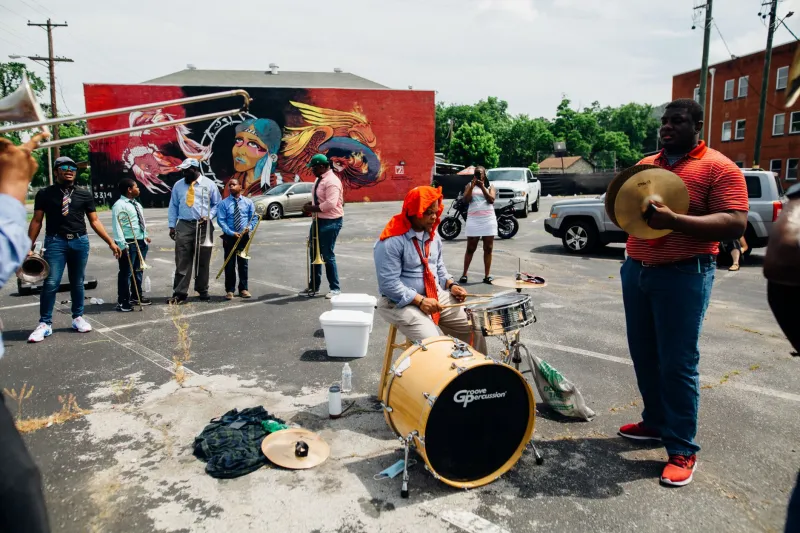
New Orleans' Bywater district has absorbed waves of creative migration while retaining a funkiness that resists easy commodification. Part of that is the city's general resistance to the kind of glass-and-steel development that transforms neighborhoods in faster-moving markets. Part of it is a local culture that's deeply suspicious of outsiders who want to improve things.
Asheville, North Carolina's River Arts District built a legitimate artist community in old industrial buildings along the French Broad River, and while it's now very much on the tourist map, the working studios are still there, still occupied by working artists, still doing the thing that made the district worth visiting in the first place. The community organized early and built structures — nonprofit arts organizations, studio co-ops, community agreements — that gave the original identity some institutional weight.
What the Pattern Actually Tells Us
If you zoom out and look at all of these stories at once, a few things become clear.
First, accidental cool neighborhoods almost always start with affordability. Cheap space is the precondition for experimentation, and experimentation is the precondition for everything else. Once affordability disappears, the engine stops.
Second, the communities that form in these spaces are doing something that looks chaotic from the outside but is actually highly deliberate: they're choosing each other. They're deciding, collectively and without a formal vote, what kind of place they want this to be.
Third — and this is the part that gets lost in most coverage of gentrification and neighborhood change — the original residents of these neighborhoods, the ones who were there before the artists and the coffee shops, rarely get credit for having built something worth transforming in the first place. The infrastructure of community that made these places safe and livable and interesting was usually already there. The newcomers didn't invent the neighborhood. They inherited it.
The most honest way to tell these stories is to start there — with what was already present, before anyone decided it was worth discovering.